
Magnets in TWS Earbuds: Drivers, Lids and Charging Cradles
No product this small has ever carried this many magnets: micro drivers, snap-in cradles, lid feel and Hall triggers — the magnetic anatomy of true wireless earbuds.
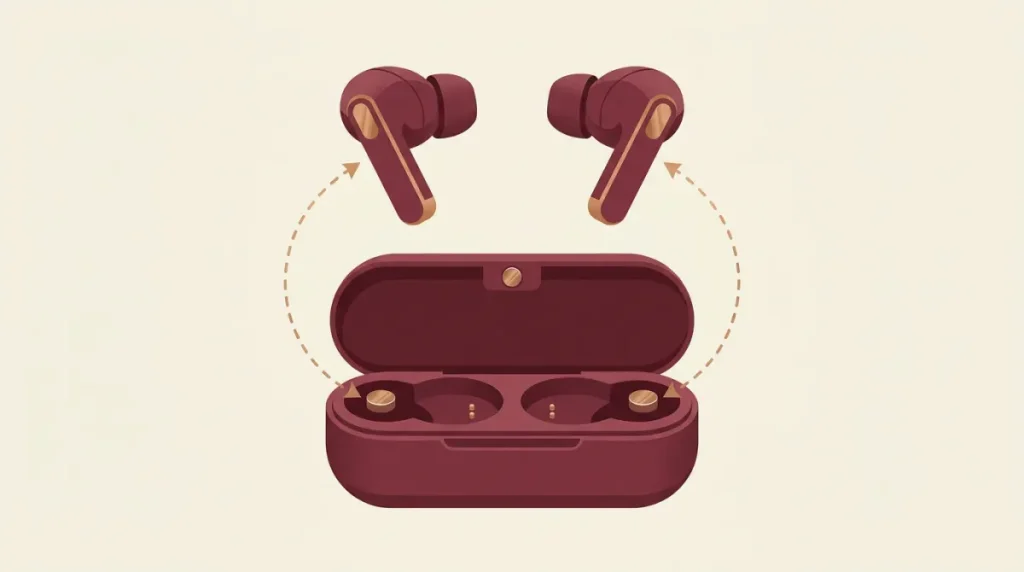
True wireless earbuds are barely a year old as a mainstream category, and they have already set a record of a different kind: no consumer product this small has ever carried this many magnets. Strip a typical pair and you will count eight to fourteen magnetic components across the buds and their charging case. Here is where they all hide, and what each one has to do exceptionally well.
Inside the bud: the smallest loud thing you own
Each earbud carries a micro dynamic driver — 6 to 12 mm across — built around an NdFeB disc or ring often no bigger than this letter “o”. At that scale, material is destiny: only the highest energy grades make audible volume from a driver you can lose in a pocket seam. This is exactly the size-versus-strength argument from our NdFeB vs ferrite guide taken to its extreme — ferrite cannot exist here.
What we grind for driver makers: ⌀3–8 mm discs and micro-rings in N48–N52, thickness ground to ±0.02 mm class, because a driver gap thinner than a hair leaves no room for magnet tolerance.
Inside the case: magnets as user experience
The charging case is where magnets stop being components and become the product’s feel:
- Cradle magnets. A pair per bud pulls each earbud onto its charging pins with a confident snap — self-aligning, so a half-blind drop still seats correctly. Get the force wrong in either direction and the product feels cheap or eats fingernails.
- Lid magnets. The clean “thock” of a premium case lid is two small block magnets meeting a steel plate — engineered pull curves, not luck. It is the first thing a reviewer touches and the cheapest premium cue in the whole bill of materials.
- Hall trigger magnets. Opening the lid wakes the buds for pairing; docking a bud switches it to charge. Those triggers are tiny magnets read by chips on the case board.
What TWS design demands from a magnet supplier
| Requirement | Why | Spec language |
|---|---|---|
| Micro sizes, real tolerances | ⌀2–5 mm parts where ±0.05 mm is a big fraction | Ground faces, ±0.02–0.03 mm |
| High grades | Battery space wars — every mm² is contested | N50–N52 |
| Consistent snap force | Lid feel must match across a million units | Tight Br window + per-lot flux testing |
| Clean plating at small scale | Parts sit near skin and lithium cells | NiCuNi default, defect-screened |
The grade guide covers the N-number decisions; miniature parts add the manufacturing half of the story — vision sorting and per-batch flux checks matter more, not less, as parts shrink.
Developing a TWS product or accessory? We supply micro discs, rings and case magnet sets from prototype up. Browse the NdFeB range or talk to an engineer with your case sketch.
FAQ
Do the magnets interfere with Bluetooth or the battery?
No. Static magnetic fields do not affect 2.4 GHz radio, and lithium cells are magnetically indifferent. Layouts only keep magnets clear of the antenna’s metal keep-out zones like any other metal part.
Why do earbuds snap into the case in the right orientation?
Polarity is the guide: cradle magnets are arranged so the correct orientation attracts and the wrong one repels or misaligns. Free mechanical keying, courtesy of pole placement.
How strong should a lid magnet be?
Strong enough that the case never gapes open in a bag, weak enough for one-thumb opening — typically a few newtons at contact. We tune it with magnet size, steel plate thickness and gap, then lock the feel with flux tolerances.