
Low-MOQ Magnet Sourcing from China: What Buyers Should Know
“MOQ 10,000” has killed more good products than bad engineering. Where minimums really come from, and the four ways sane factories shrink them.
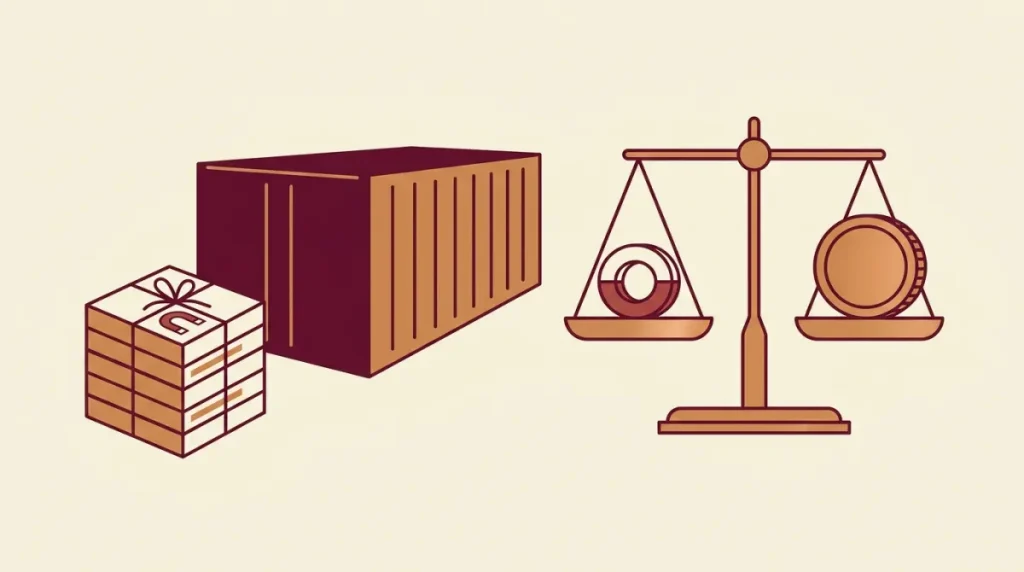
“MOQ 10,000 pieces” has killed more good products than bad engineering ever did. Small teams read that line, shelve the custom magnet, and duct-tape a standard part into a design that deserved better. It does not have to work that way — but you need to understand where MOQ really comes from to negotiate around it.
What MOQ actually pays for
Minimums are not gatekeeping; they amortize fixed costs. A custom magnet run carries setup that exists whether you order fifty or fifty thousand: machine changeover and fixturing, coating-line minimum loads, a magnetizing fixture matched to your part, first-article inspection. Divide those hours by 50 pieces and the unit price looks offensive; by 50,000 and it vanishes. Any factory quoting honest small batches is really quoting its setup efficiency.
How we keep small orders sane
- Standard-adjacent sizing. If your design tolerates ⌀10×3 instead of ⌀9.7×3.1, you ride existing tooling and stock blanks — often the whole MOQ problem evaporates. Ask before you freeze the drawing.
- Batch pooling. Common sizes, grades and coatings run in shared production windows; your 500 pieces join a larger run’s setup.
- Prototype lanes. Machined-from-blank prototypes skip pressing tools entirely: single pieces in days, at prototype pricing, exactly for proving designs — the path most of our eight-parameter RFQs start on.
- Honest tiering. A real quote shows 100 / 1k / 10k pricing side by side, so you see the amortization curve and decide with open eyes.
Small-order traps to avoid
- The too-cheap sample. Sample pricing below plausible cost sometimes means sample-grade process — parts that will not match mass production. Ask whether samples run on production tooling.
- Spec drift between batches. Small repeat orders are where flux and coating consistency quietly slip. Per-lot test reports keep everyone honest — we attach them by default.
- Ignoring logistics floor. Below a certain order value, freight and handling dominate cost. Sometimes 300 pieces ships for the price of 150 — order the 300.
The bigger point
Small orders are not charity — they are how tomorrow’s volume customers are made, and any supplier who has grown with its clients knows it. We quote from single prototypes upward and say plainly which quantity makes your unit price sensible. Test us with the small one.
FAQ
What is a “normal” magnet MOQ?
For truly custom pressed parts, industry norms run 1,000–5,000; for machined prototypes, one piece. The spread between suppliers reflects setup efficiency more than policy.
Do small orders get worse quality?
They must not — same line, same QC, smaller count. That is precisely what per-lot reports verify. Treat any “sample-only process” admission as a red flag.
Why is unit price at 100 pcs so much higher than at 10k?
Fixed setup divided by 100. The honest response is not outrage but math: find the quantity where amortization flattens — often surprisingly low — and buy there.